Thinking about selling your Weston country estate but not sure how to price it? When your property spans acres, includes outbuildings, and offers real privacy, a simple price per acre will not tell the full story. You want a price that attracts the right buyers and protects your bottom line. This guide shows you how Weston’s estate market works, what drives value on large parcels, and how to build a defensible price that sells with confidence. Let’s dive in.
Weston estate market basics
Weston’s 06883 market is low-density and known for large-lot living, privacy, and conservation-minded planning. True country estates are limited in number, so each listing often appeals to a specialized buyer segment. With fewer direct comparables and more property differences, price setting depends on careful analysis and professional judgment.
Why pricing is harder in 06883
Sales volume for estates is modest and properties vary widely in acreage, usability, and improvements. That means wider valuation ranges and less reliance on simple averages. A thoughtful pricing plan uses multiple methods and strong documentation to earn buyer confidence.
Where to find current data
Lean on recent 06883 sales and current competition from the regional MLS, along with Weston Assessor and Town Clerk records for parcel details. Planning, zoning, wetlands, and health department files clarify what your land allows. This data supports your price and reduces surprises during buyer due diligence.
Focus on usable acreage
Buyers pay for usable land, not just gross acreage. Wetlands, steep slopes, narrow wooded strips, and conservation easements can reduce functional acreage and future options.
- Obtain a current survey, wetlands delineation, and topographic map.
- Confirm septic design, perc tests, and well capacity.
- Gather recorded easements and any conservation restrictions.
Zoning and development potential
Zoning shapes minimum lot size, allowable accessory uses, and subdivision feasibility. Setback rules and any overlay protections affect where new structures can go. Understanding what is permitted helps buyers see long-term potential and supports your price.
Environmental and title constraints
Regulated wetlands and watercourses can limit where you build and increase buyer uncertainty. Conservation or agricultural restrictions reduce development rights and should be disclosed. Clear, early transparency avoids price renegotiations later.
Access, utilities, and infrastructure
Driveway length and condition, road type, and utility access affect costs and marketability. Septic and well systems, including age and capacity, influence financeability and buyer comfort. Provide design documents and maintenance records to strengthen your position.
Privacy and noise factors
Privacy carries a real premium in estate markets. Mature buffers, setback distances, and established tree cover add value. Nearby road noise or visible neighbors can reduce premiums, so document what your property offers.
Outbuildings and lifestyle features
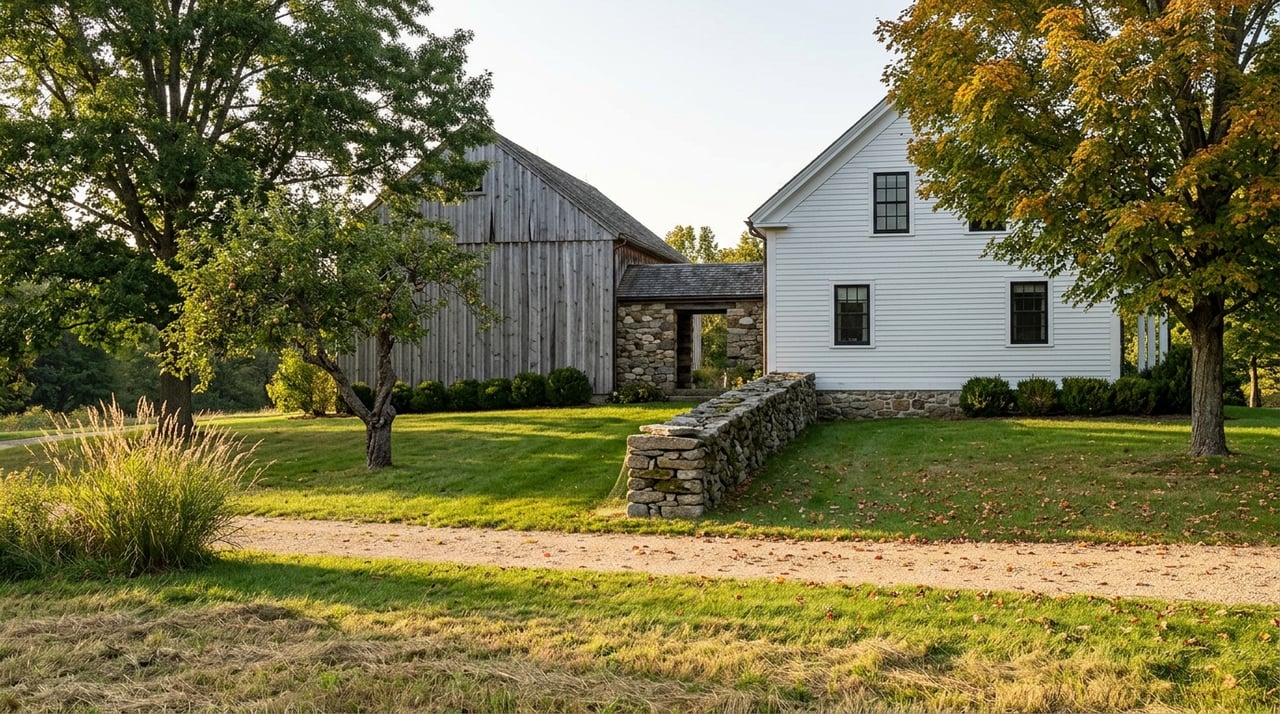
Barns, guest houses, pools, courts, ponds, and trails attract lifestyle buyers when they are well built and properly permitted. Value each feature based on its contributory value to the market, not replacement cost alone. Unpermitted or poor-condition structures can reduce value or raise financing hurdles.
Use multiple valuation methods
No single metric captures a unique estate. Combine approaches to build a defensible price range.
Sales comparison approach
Expand your comp search to include longer time frames and adjacent towns when sales are sparse. Segment comps by usable acreage, equestrian facilities, guest houses, privacy level, and main house condition. Adjust first for land quality, then improvements, and finally lifestyle amenities and privacy.
Cost approach
When you have unique improvements like a barn or arena, estimate replacement cost minus depreciation and add land value. This cross-check is helpful when comps are thin.
Income approach
Consider this only if there is clear income potential, such as a legal rental guest house or boarding operation. Most estates rely on sales comparison and cost approaches.
Highest and best use
Confirm whether any part of the property supports alternative uses, such as potential subdivision or conservation sale. Always verify feasibility with the appropriate town departments.
How to craft comps and adjustments
A structured process keeps your pricing objective and defensible:
- Assemble a wide pool of candidate comps across 06883 and nearby towns. Capture sale date, price, acreage, usable acres, improvements, permits, time on market, and concessions.
- Segment comps by the most important drivers for your property: usable acreage, equestrian features, guest houses, privacy, and main-house condition.
- Adjust for land quality first, including wetlands, topography, and percs. Then adjust for permitted improvements, followed by lifestyle features and privacy.
- Use paired-sales when possible to quantify per-acre or amenity premiums.
- Cross-check with the cost approach for major structures and compare to current active competition.
Typical adjustments to consider:
- Wetlands or unusable acreage: strong negative adjustment beyond simple per-acre math.
- Barns or equestrian facilities: positive adjustment if permitted and market-aligned.
- Guest house or ADU: positive only if legally permitted and code-compliant.
- Privacy buffers: positive premium, often a key negotiation point.
- Access and road maintenance obligations: negative if costs or complexity transfer to the buyer.
Set a market-reflective price
Build a price range from your multi-method analysis, then choose strategy based on goals.
- To maximize competitive interest, list near the high end of the defensible range with standout presentation and documentation.
- To move more quickly, price near the median of credible comps and highlight usability and permits.
- Avoid headline price-per-acre comparisons. Buyers evaluate estates holistically and weigh usability, privacy, and features over raw acreage.
Pre-listing actions that add value
Target the steps that reduce buyer uncertainty and improve market appeal.
- Resolve title issues and confirm any recorded easements or restrictions.
- Commission an updated survey, septic and well documentation, and gather permits and certificates of occupancy.
- Address visible defects and safety items, from roof leaks to hazardous trees or broken fencing.
- Bring unpermitted structures into compliance if practical, or disclose clearly with supporting documentation.
- Focus spend on clarity and maintenance rather than high-end renovations with uncertain return.
Marketing that sells an estate
Presentation and proof matter in this niche.
- Visuals: use high-resolution photography, aerials that show property lines and surroundings, and twilight exteriors. Showcase main house, guest spaces, barns, and grounds.
- Documentation: offer a concise due-diligence packet, including survey, tax card, permit history, and recent septic or percolation tests.
- Storytelling: tailor language to your top buyer segments, such as equestrian use, privacy, trails, or compound living.
- Channels: pair MLS exposure with targeted broker opens and discreet outreach to likely buyers.
- Accuracy: ensure MLS fields for acreage, outbuildings, and showing instructions are complete and precise.
Avoid common pitfalls
Over-investing in luxury renovations often does not deliver a full return on large tracts. Neglecting permits or leaving unpermitted structures unresolved can derail financing and appraisals. If subdivision is on the table, confirm feasibility early to avoid marketing claims that cannot be supported.
Seller checklist
Prepare these items before listing to support a confident price and smoother sale:
- Current ALTA or boundary survey and lot lines
- Deed, easements, and any conservation restrictions
- Assessor’s property card and tax history
- Zoning classification, setbacks, and use summary
- Septic design, perc test results, well logs, and maintenance records
- Permits and certificates of occupancy for the house and all outbuildings
- Any recent appraisals and contractor estimates for major items
- Operations and maintenance lists for mechanicals, pool, barns, and grounds
What to expect on timing
Estate properties often take longer to sell than typical single-family homes due to a narrower buyer pool and higher price points. Strong pricing, complete documentation, and standout marketing can reduce time on market and improve negotiating leverage. Be prepared for thorough buyer due diligence and lender review of acreage, accessory structures, and access.
Ready to price your Weston country estate with confidence? For a discreet, data-driven strategy and white-glove marketing tailored to acreage and lifestyle buyers, connect with Jackie Davis to Request a Confidential Home Valuation.
FAQs
How do I estimate usable acreage on a Weston estate?
- Start with a current survey, wetlands delineation, and topographic map, then confirm septic, well, and any easements to understand where you can build or expand.
What documents should I gather before listing a 06883 estate?
- Assemble your survey, deed and easements, permits and COs, septic and well records, zoning summary, assessor card, and maintenance logs to support your price.
Do barns and guest houses increase price in Weston?
- Yes, when they are permitted, well built, and aligned with buyer demand; unpermitted or poor-condition structures can reduce value or complicate financing.
Should I subdivide before selling my acreage?
- Only if feasibility is strong and the expected premium outweighs costs and delays; confirm with zoning and a surveyor before making plans.
How long do Weston country estates take to sell?
- Expect longer timelines than standard homes, but well-priced, well-documented estates can still attract fast, competitive offers from motivated buyers.